
We are pleased to announce that Dr. Andrea Vannucci has joined the University of Washington Department of Anesthesiology & Pain Medicine as the inaugural holder of the Laura Cheney Chair in Anesthesia Patient Safety. Recently approved by the UW Board of Regents, the endowed chair was made possible through the extraordinary generosity of Dr. Frederick W. Cheney and Pi Cheney.
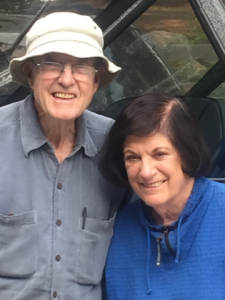
Fred and Pi Cheney, who met as students at Tufts University, shared many loving decades together before Pi’s passing late last year. Their philanthropy reflects a deep, enduring commitment to patient safety and to the department that Dr. Cheney helped shape through his leadership and dedication to public service.
Dr. Cheney joined the University of Washington faculty in 1964 and served as department chair from 1994 to 2007. He continued to practice until 2015, when he retired. During his tenure he was a founding leader of the American Society of Anesthesiologists (ASA) Closed Claims Project, a landmark initiative that fundamentally transformed anesthesia practice and helped catalyze the modern patient safety movement.
The endowment honoring Laura Cheney, a nursing supervisor at New England Deaconess Hospital, pays tribute to the woman who inspired her son Fred to pursue a career in medicine. Today, that legacy continues through Dr. Vannucci’s leadership at UW Medicine.


With decades of experience in academic anesthesiology in both the United States and Europe, Dr. Vannucci brings highly regarded leadership to his role. His vision emphasizes continuity—honoring the department’s history while strengthening systems that support clinicians, learners and patients across UW Medicine.
In the following interview, Vannucci reflects on his path to UW, the historical work that informs his approach, and his priorities for advancing patient safety in a complex, evolving healthcare environment.
What drew you to UW Medicine and this role?
The opportunity to contribute to a department with such a strong legacy, especially in safety and quality, was very compelling. UW Medicine has an excellent national and international reputation.
On a personal level, our move to Seattle brings my family closer together. My wife Laura is now also a professor in the Department of Anesthesiology & Pain Medicine, and our daughter is an OB/GYN attending at UW. We look forward to spending more time with our grandchildren.
I am grateful and very humbled by the Cheney family for creating the endowed chair. I’ve read many of Dr. Cheney’s articles over the years, and his work is truly foundational.
Can you expand on that?
Vannucci: One example is Dr. Cheney’s role as senior author for a landmark 1991 JAMA study, conducted with UW colleague Dr. Karen Posner and Dr. Robert Caplan, who at that time was affiliated with Virginia Mason.
They presented identical clinical cases to anesthesiologists but told one group that the outcome was good and another that the outcome was poor. They found that knowledge of the outcome significantly influenced how reviewers judged the adequacy of clinical performance. That was a groundbreaking finding at the time.
It made clear that whenever we review cases, especially adverse events, our judgment is strongly influenced by outcome bias. That insight remains incredibly important for how we think about patient safety today.
UW has a long history in anesthesia patient safety. How do you see that legacy?
Vannucci: The Closed Claims Project is one of the University of Washington’s most important contributions to medicine. In the mid‑1980s, anesthesiology was facing a malpractice insurance crisis, driven by a troubling number of serious patient injuries.
In response, the American Society of Anesthesiologists launched two major initiatives: the Anesthesia Patient Safety Foundation and the Closed Claims Project, led in large part by Fred Cheney, along with UW faculty members Karen Posner and Karen Domino.
The Closed Claims Project analyzed adjudicated malpractice cases in great detail, allowing researchers to understand not just what went wrong, but why. That work helped to identify the most severe anesthetic complications and led directly to safer monitoring, better equipment, improved training, and new ways of thinking about systems and human factors.
Many of the patient safety principles later adopted across medicine originated in anesthesiology—and specifically in work done here.
You’ve built much of your career around quality and patient safety initiatives as well. How did that begin?
Vannucci: I’ve been involved in patient safety leadership since 2009. At Washington University in St. Louis, I served as department patient safety officer and helped develop one of the first interdisciplinary quality and safety curricula, involving medical students, nurses and respiratory therapists.
Later, at the University of Mississippi, I was the inaugural vice chair for quality and safety. Working in resource‑constrained environments taught me a great deal about collaboration and system‑level improvement. Those experiences shaped how I think about aligning departmental goals with institutional priorities.
How did anesthesiology come to be linked so closely with patient safety?
Vannucci: Anesthesiology has always had a fundamentally preventive mindset. Our role is to keep patients safe and comfortable while someone else performs a necessary but potentially dangerous intervention or diagnostic procedure.
The concept of patient safety as a discipline—an organized effort to prevent harm caused by medical care—emerged primarily from the practice of anesthesia. In fact, the first appearance of the term “patient safety” together in the title of a medical paper was in 1960, authored by an anesthesiologist. That history is remarkable and something the specialty should be very proud of.
What does patient safety look like today, compared with earlier in your career?
Vannucci: In a way it is more complex. Anesthesia itself has become much safer. Catastrophic events directly attributable to anesthetic care are now rare. Today, risk is shared across the perioperative continuum—patient optimization before surgery, coordination among teams, and especially care in the days after surgery. Improving safety now means improving systems, education, communication, and coordination, not just technology.
What is your early assessment of anesthesia patient safety at UW today?
Vannucci: Many of my colleagues here have made significant contributions to the specialty through research, the development of techniques, and the creation of tools—some of which have been patented and disseminated—to improve procedural safety.
There are many very insightful and capable colleagues working across the UW network, and my understanding is that our department chair, Dr. Mackensen, is focused on building a stronger, more robust continuum between the different medical centers from an administrative perspective.
What priorities are you most interested in focusing on at UW?
Vannucci: The most important starting point is alignment with institutional priorities. Beyond that, I’m especially interested in unanticipated ICU admissions, perioperative handoffs, and how we can better use the electronic medical record to enhance quality and safety of healthcare delivery.
I also see real promise in thoughtfully applied artificial intelligence to help clinicians and administrators navigate increasingly complex clinical records and operational data to make better informed and safer decisions.
How do you think about leadership and building a strong safety culture?
Vannucci: Trust and teamwork are essential. We need shared priorities and mutual respect. I also believe deeply in mentorship—supporting the next generation and learning from senior colleagues. One of my goals is to help build durable structures that sustain quality and safety efforts across generations.
What would you like residents to know about training at a public institution like UW?
Vannucci: You are exposed to extraordinary diversity of patients, pathologies and perspectives. At a public institution, you are serving the community and the state, and that matters. You also learn how care is delivered within real world constraints, which is invaluable preparation for any future path. It’s a rigorous and demanding environment, but also a deeply meaningful one.
Grounded in history, collaboration and innovation, Dr. Vannucci’s leadership reflects both Dr. Cheney’s pioneering work and the future of anesthesia patient safety. We are excited to partner with him as he leads continued progress at UW Medicine.