In the span of just a few months, UW Medicine’s Pain Medicine Division has experienced an unprecedented wave of leadership renewal across its entire inpatient network. The changes bring fresh energy, sharpened expertise, and a shared commitment to comprehensive, compassionate pain care for every patient.
Division of Pain Medicine lays groundwork for unified approach to care across UW Medicine
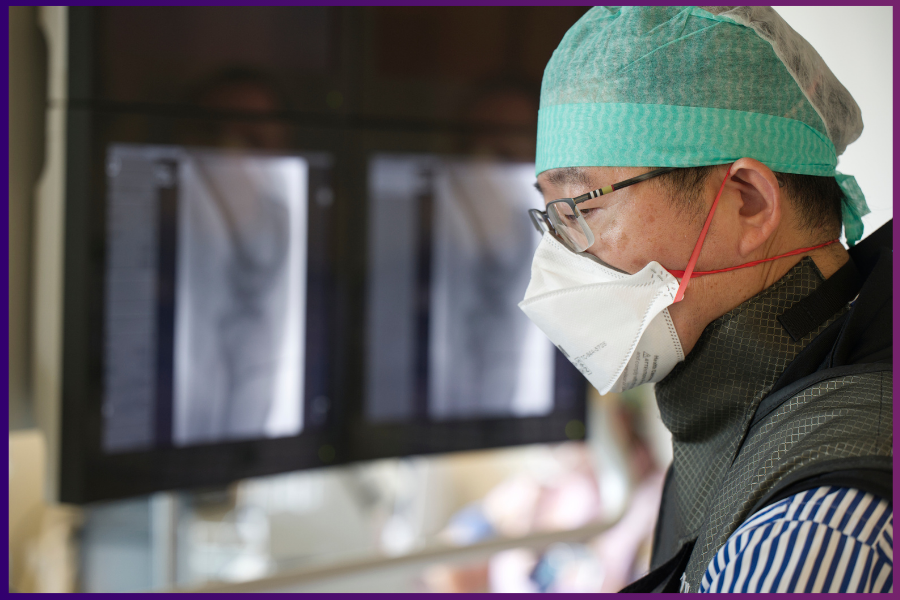
This doesn’t happen often, to have multiple leaders stepping into these roles at the same time…. At each hospital patients everywhere will benefit.

UW Medicine has a long tradition of innovation in pain care, dating back to the leadership of Dr. John J. Bonica (1917–1994). As founding chair of the UW Department of Anesthesiology (1960), Bonica is internationally recognized for pioneering a multidisciplinary approach to pain treatment, founding the first pain clinic and training program, and authoring the landmark book The Management of Pain (1953). His work helped establish pain as a recognized medical specialty and positioned UW as a global leader in the field.
“We really were one of the very first hospitals in the world to have a pain service in the hospital dedicated to patients with postoperative and acute pain,” explains Pain Medicine Division Chief Dr. Brett Stacey. “We’ve had inpatient pain services since the 1980s.”
While programs at Harborview and UW Medical Center – Montlake have developed essential pain care strategies for decades, they evolved separately with distinct teams, approaches and policies. But now, with Stacey stewarding the vision, a new crop of leadership is moving toward a unified system of inpatient pain service across both campuses.
A rare alignment
“This doesn’t happen often,” says Stacey, “to have multiple leaders stepping into these roles at the same time.” With Department Chair Dr. Burkhard Mackensen’s support, he is seizing the opportunity to harmonize practices and strengthen collaboration among the team.
At Harborview Medical Center, Dr. Paul Bhalla has taken the helm as chief of pain medicine, bringing nearly a decade of on-site experience and a track record of advocating for patients. Across town at UW Medical Center – Montlake, Dr. Jiang Wu now directs the acute pain service, blending his acute, chronic and regional pain expertise to serve a medically complex surgical population.
Overlaying both, Dr. Katherin Peperzak, associate professor of anesthesiology and pain medicine, has been named the inaugural director of inpatient pain services across UW Medicine hospitals. In her new role, Dr. Peperzak will design and oversee initiatives to align staffing models and standardize care practices, harnessing the best of each site’s practices, while laying the groundwork to expand to UW Medical Center – Northwest.
With a combination of technical excellence and extensive experience at UW Medicine, the incoming leaders are highly accomplished and esteemed by colleagues. For Stacey, this new unification will help advance priorities that include coordinated care plans with other specialists, multimodal pain strategies, earlier intervention, and less reliance on opioids. “At each hospital,” he says, “patients everywhere will benefit.”
Harborview: Building on strength
Dr. Paul Bhalla, who trained in anesthesiology and psychology, doesn’t plan to overhaul what works. Instead, he’s focused on early engagement—identifying surgical patients likely to experience significant pain before they even reach the operating room. That means closer coordination with surgeons, anesthesiologists, and patients themselves to plan care that controls pain, prevents complications and shortens recovery time.
“We’re working on getting involved with patients a little earlier, to set expectations about what we do, how we can help, and make a plan for the surgery itself,” says Bhalla. “As we’ve piloted this approach, it seems to really help patients feel reassured, knowing that we have a big team that will help them throughout the entire process.”
“Dr. Bhalla is very comfortable with the multidisciplinary team they have at Harborview,” boasts Stacey, adding that Bhalla will oversee acute pain service at Harborview during a major transition to increase capacity. “He has chronic pain expertise, regional anesthesia training, and he works in the operating room. He’s got a lot of energy and excitement that will help to shape the future of pain service.”
For Bhalla, who first joined the Department of Anesthesiology & Pain Medicine faculty in 2011, and then again in 2016, he acknowledges the mentors who paved the way for his leadership. “I’m inheriting an incredible pain service built over the years by Dr. Ivan Lesnik, [former co-director of the Harborview Integrated Pain Care Program] Deb Gordon and those before them. Harborview is unique—a major trauma center with a huge catchment area and a county hospital, so we see patients with very complex pain. Over time, the team has developed a truly interdisciplinary model, with anesthesiologists, advanced practice providers, an attending rehabilitation psychologist, pharmacist, residents, fellows and a regional team. That structure allows us to tailor solutions for each patient. I feel lucky to step into this role with such an experienced group.”
UW Medical Center – Montlake: Complex care, comprehensive skills
“UW Medical Center – Montlake is a unique environment,” Stacey explains, “with many patients undergoing surgical procedures that are very advanced, such as organ transplants. This means that the patients can have medically complex pain needs that require 24-hour care.”
Amid these demanding circumstances, Dr. Jiang Wu, an associate professor of anesthesiology and pain medicine and top-rated clinician at UW Medicine, brings a wealth of technical experience across different specialties to treat both the physical and psychosocial aspects of pain.
“Pain is inherently subjective and multidimensional,” Wu says. “It encompasses physical sensations as well as emotional and social dimensions. The perioperative period is often one of the most vulnerable times for patients—when medical, surgical, and psychosocial challenges converge and intensify. Managing pain in this setting is rarely straightforward.”
According to Wu, acute pain service requires not only highly specialized expertise, but also a dedicated, interdisciplinary approach that delivers individualized, patient-centered care.
“I am deeply honored to assume stewardship of the acute pain service at UW Medical Center – Montlake, succeeding Dr. Gregory Terman,” says Wu. “His leadership shaped four decades of excellence in complex pain care at Montlake. Our service is built on a long‑standing culture of consultation, collaboration, and trust.”
Together with Dr. Dermot Fitzgibbon, director of the chronic pain service at the Montlake campus, Wu will focus on refining protocols and workflows that not only support surgical colleagues across all specialties but also ensure the highest-quality care for patients experiencing the vulnerability of pain in a hospital setting.
Inpatient pain services: The system as a whole
Dr. Katherin Peperzak’s appointment as director of inpatient pain services marks a major milestone for UW Medicine. “I am so excited for her role,” says Stacey, who played a pivotal role in creating this position.
During her time at UW Medicine, Peperzak has gained extensive leadership experience in both inpatient and outpatient settings. “I have always felt that UW is very supportive of me shifting and changing to the next thing,” she says, noting she gravitates toward opportunities that demand a view of the bigger picture. “I’ve always been one of those people that gets involved in projects, whether I’ve had a leadership title or not. I like to be generally helpful and part of solutions.”
Leveraging her deep clinical knowledge and administrative skills, her numerous department and institutional roles include recently serving as medical director of UW’s flagship outpatient pain clinic, the Center for Pain Relief at UW Medical Center – Roosevelt.
With an educational background that includes computer science and engineering disciplines before transitioning to medicine, Peperzak is known for her ability to communicate effectively and navigate nuanced patient situations. Her leadership style centers around listening, transparency and evidence-based decision-making, meeting the needs of providers and patients alike.
“She is an outstanding leader who can balance different perspectives well,” emphasizes Stacey, who has worked closely with Peperzak since they both joined UW Medicine on the exact same day, eleven years ago.
One of Peperzak’s key priorities is to coordinate and harmonize care between the two major pain services at Harborview and the Montlake campus, ensuring a unified approach to care across sites.
“I’m looking at service metrics that we haven’t taken a close look at before,” she explains, noting that the analysis will guide decisions on staffing models and operational efficiency. The initiative is designed to help teams deliver patient-centered care more effectively while laying the groundwork for future growth.
What excites Peperzak most is the opportunity to dive deeper into new areas of management and foster innovation within a supportive environment. “The key thing is really understanding what everyone’s concerns are and what they want to make happen,” she says.
By combining feedback with analytical insights, she aims to create meaningful change that reflects UW Medicine’s commitment to excellence.
Why it matters: Our patients
“Our patients are always our number one priority,” stresses Bhalla.
For patients, the standardization of inpatient pain services means greater consistency and reliability in pain management, no matter which campus they visit.
“Our goal is to support patients throughout their entire hospital stay, making sure they’re as comfortable as possible,” Bhalla says. “We also take steps to ensure that when patients go home, they can safely reduce or stop strong pain medications. Inpatient pain services are focused on doing what’s best for patients, while also caring for the community.”
The Division of Pain Medicine’s goal to improve collaboration and communication across campuses is founded on UW Medicine’s commitment to delivering the highest level of care to our patients, inside the hospital and beyond.
UW Medicine Pain Division leadership

Brett Stacey, MD
Chief, Division of Pain Medicine

Katherin Peperzak, MD
Director, Inpatient Pain Services

Paul Bhalla, MD
Chief of Pain Medicine, Harborview Medical Center

Dermot R. Fitzgibbon, MBBCh
Director, Chronic Pain Service, UW Medical Center – Montlake

Jiang Wu, MD
Director, Acute Pain Service, UW Medical Center – Montlake